On this pageShowHide
Contents
4 sections • ~8 min
 Verified Guide
Overview of the CEFR German Levels
Direct Answer
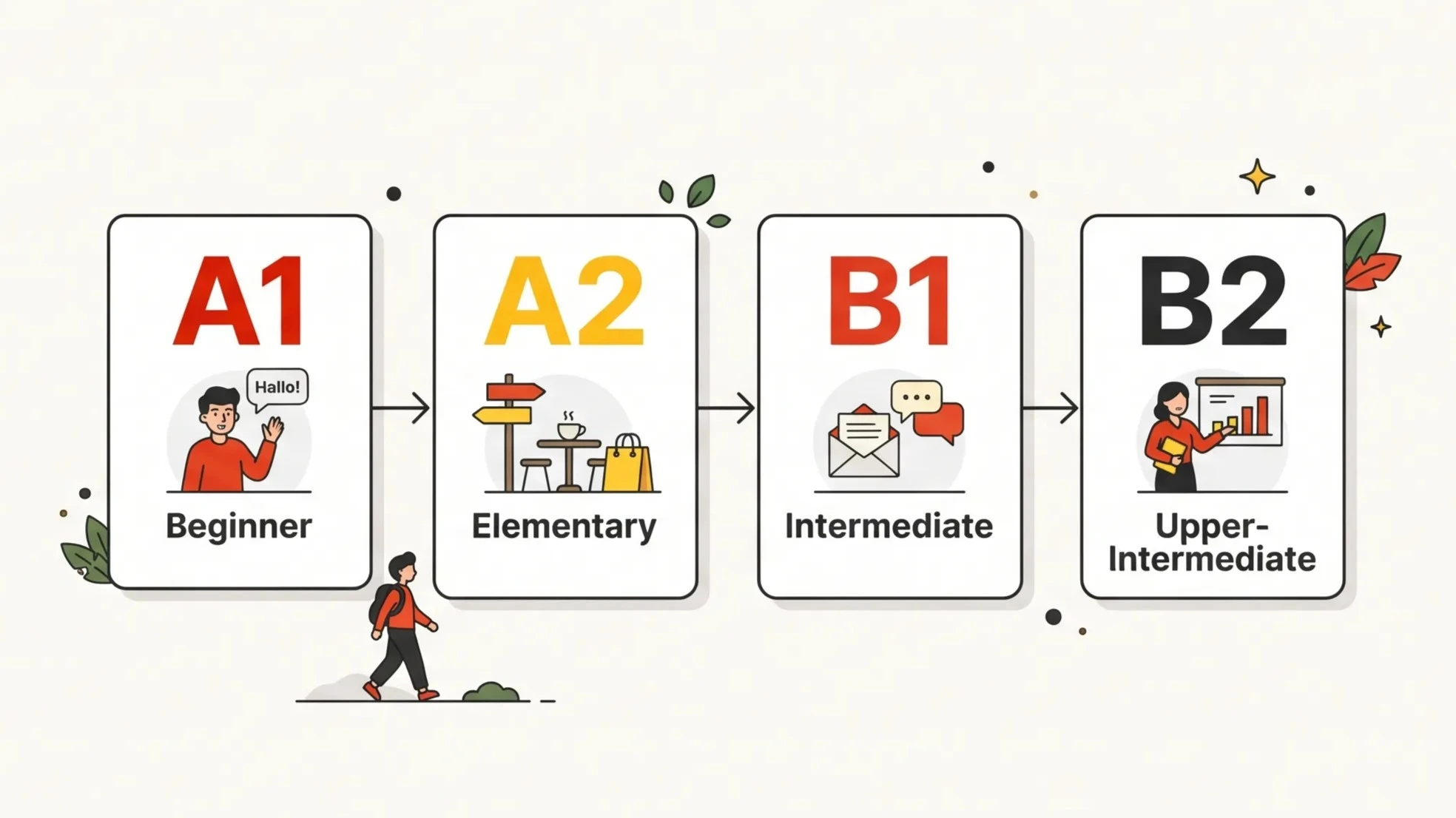
German proficiency is internationally standardized by the CEFR framework into six levels: A1 (Beginner), A2 (Elementary), B1 (Intermediate), B2 (Upper-Intermediate), C1 (Advanced), and C2 (Mastery). For Indian learners heading to Germany for studies, Ausbildung, or employment, levels A1 through B2 are the most critical milestones.
At Fluent German Academy in Hisar, we teach complete A1 to B2 courses. Below is an exact breakdown of what each level enables you to do.
Level-by-Level Breakdown (A1 to B2)
| Level | Proficiency Stage | Key Capabilities | Typical Purpose |
|---|---|---|---|
| A1 | Beginner | Introduce self, order food, ask simple questions, basic Nominativ/Akkusativ | Spouse visa, baseline foundation |
| A2 | Elementary | Past tense (Perfekt), directions, shopping, health, subordinate clauses (weil, wenn) | Everyday travel, foundation for B1 |
| B1 | Intermediate | Independent opinions, debates, formal letters, Genitiv, Konjunktiv II, passive voice | Ausbildung, citizenship, job seekers |
| B2 | Upper-Intermediate | Complex technical debates, reported speech, nominalization, academic essays | German university degrees, nurse/doctor licensing |
Which German Level Do You Need?
Your target level depends strictly on your academic or migration pathway according to official German regulations:
- Family Reunion / Spouse Visa: Generally requires certified Goethe A1 (Start Deutsch 1).
- Ausbildung (Vocational Training): Requires at least certified B1 for most technical/commercial trades, and B2 for patient care in nursing.
- Public University Admissions: German-medium programs require B2 or C1. English-medium programs often recommend A1–B1 for daily living.
- Healthcare Professionals (Doctors & Nurses): B2 certificate is required to begin the licensing and recognition (Approbation) process.
Disclaimer: Requirements vary by German federal state (Bundesland) and institution. Always verify specific language prerequisites with the official university or embassy.
Frequently Asked Questions
Which German level is required for an Ausbildung in Germany?
Most dual vocational training (Ausbildung) programs require at least B1 certification, while patient-facing healthcare or nursing programs frequently require B2.
Can I study at a German university with B1 German?
English-taught degree programs may accept B1, but German-taught degrees require B2 or C1 (TestDaF or Goethe C1).
How long does it take to advance from A1 to B2?
With consistent small-batch study at Fluent German Academy in Hisar, advancing from zero (A1) to B2 typically takes 10 to 14 months of dedicated classroom and mock test study.
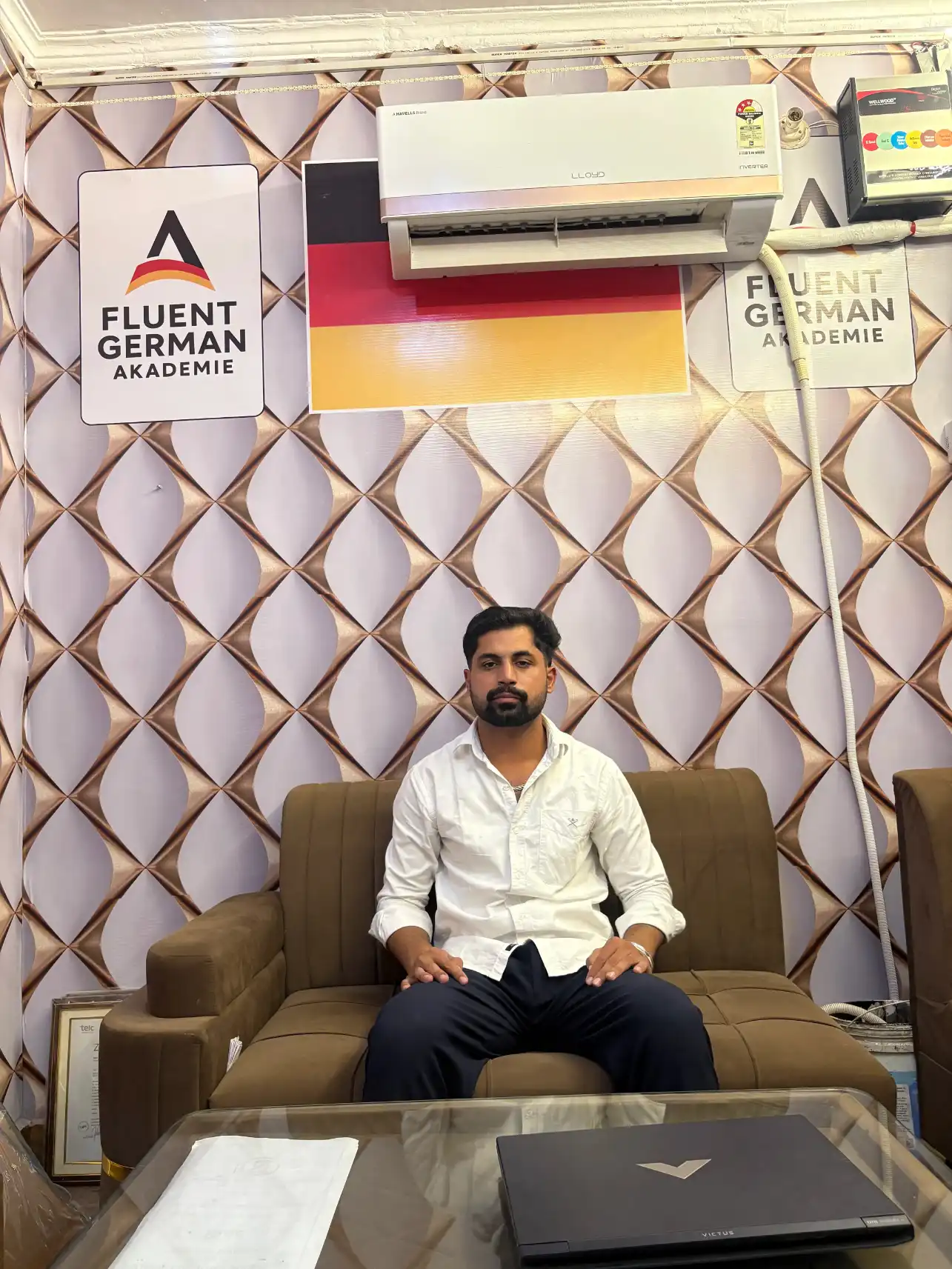
Ankush Dhanda
Founder & Lead Trainer • Fluent German Academy
Specialized in A1–B2 German language instruction, spoken German confidence, and Goethe/telc exam preparation methodology in Hisar.