On this pageShowHide
Contents
3 sections • ~6 min
 Verified Guide
German Language as the Bridge to Opportunities
Direct Answer
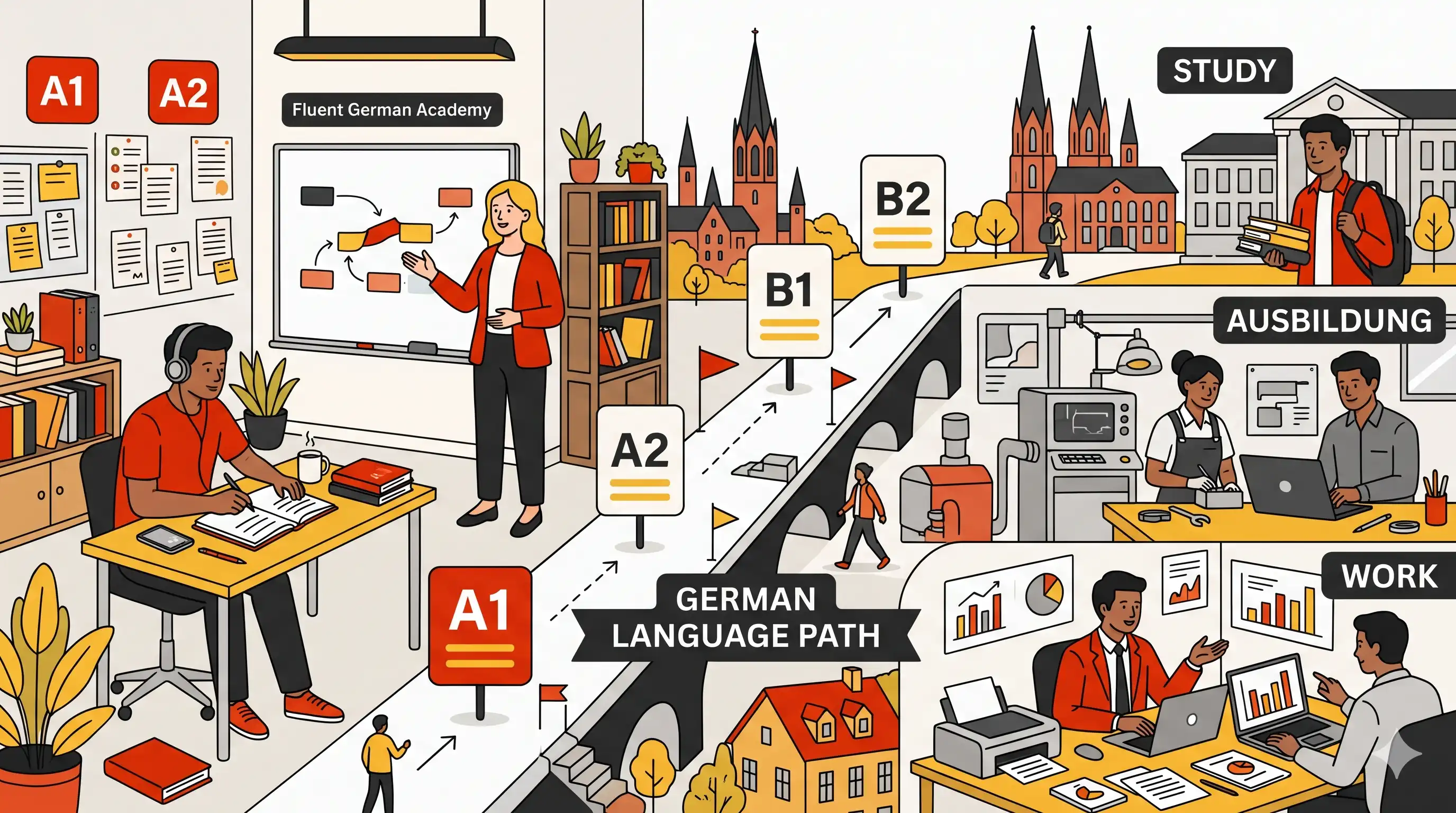
German language proficiency unlocks three major international pathways: tuition-free higher education at world-renowned public universities, paid dual vocational apprenticeships (Ausbildung) across engineering, nursing, and IT, and skilled migration under Germany's Skilled Immigration Act (Fachkräfteeinwanderungsgesetz).
At Fluent German Academy, we guide students through the language milestones required for each pathway.
3 Major German Opportunities & Level Requirements
1. Higher Education at Public Universities
Germany offers over 300 public universities with minimal or zero tuition fees. While English master's degrees exist, German-taught bachelor's and master's programs require B2 or C1 proficiency. Living in Germany also requires day-to-day conversational German.
2. Dual Vocational Training (Ausbildung)
A 3-year paid vocational program in trades such as nursing, mechatronics, hospitality, and IT. Trainees receive a monthly stipend (~€900–€1,300) while learning. B1 certification is mandatory for most contracts; nursing typically requires B2.
3. Skilled Employment & Opportunity Card (Chancenkarte)
Germany's points-based Opportunity Card grants points for certified German language skills (A1, A2, B1, or B2), enabling qualified job seekers to enter Germany to find employment.
Frequently Asked Questions
Is education really tuition-free in Germany?
Most public universities in 15 of 16 German federal states charge zero tuition fees for both EU and non-EU students; learners pay only a nominal semester contribution (Semesterbeitrag) of ~€150–€350.
What is an Ausbildung and does it require German?
An Ausbildung is a dual vocational training system combining classroom education with paid on-the-job training. Almost all Ausbildung contracts legally require certified B1 or B2 German.
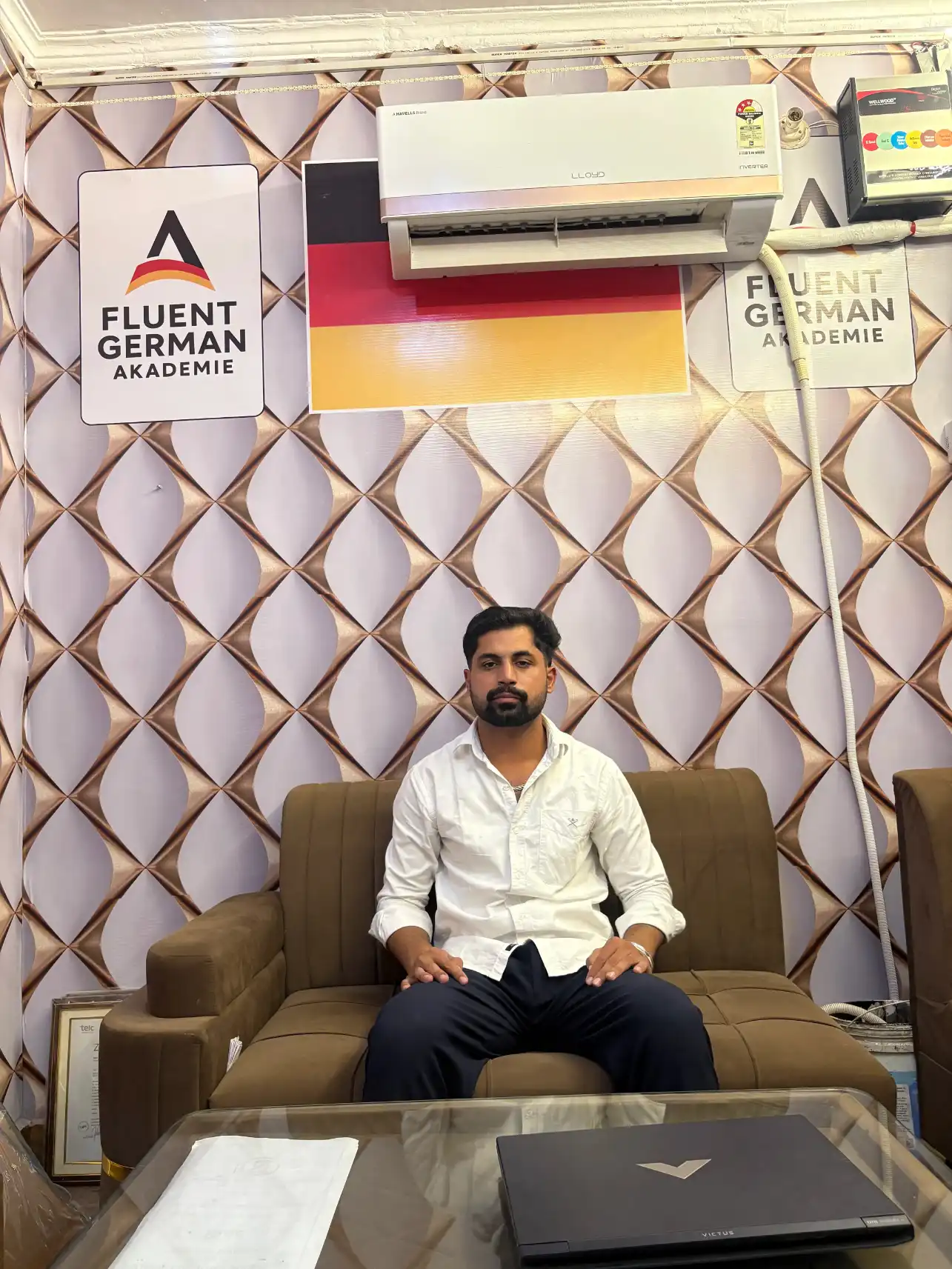
Ankush Dhanda
Founder & Lead Trainer • Fluent German Academy
Specialized in A1–B2 German language instruction, spoken German confidence, and Goethe/telc exam preparation methodology in Hisar.